
Skilled Trades Certifications
Explore industry-recognized skilled trades certification programs to qualify for in-demand roles, grow in your career, and increase your earning potential across electrical, HVAC/R, welding, plumbing, construction, and related skilled trades careers.
Discover certifications that match your career goals and experience.
This outlook supports credentials tied to HVAC/R, electrical work,
welding, construction, maintenance, inspection, safety, and
industrial systems.
Source: BLS
Pursuing careers in electrical work, HVAC/R, plumbing, welding, construction, maintenance, renewable energy installation, and related hands-on trades.
Learn how certifications support skilled trades careers →Get job alerts
Notify me about employers hiring candidates with industry-recognized skilled trades certifications.
Unsubscribe anytime. · Privacy Policy


How Skilled Trades Certifications Support Career Growth
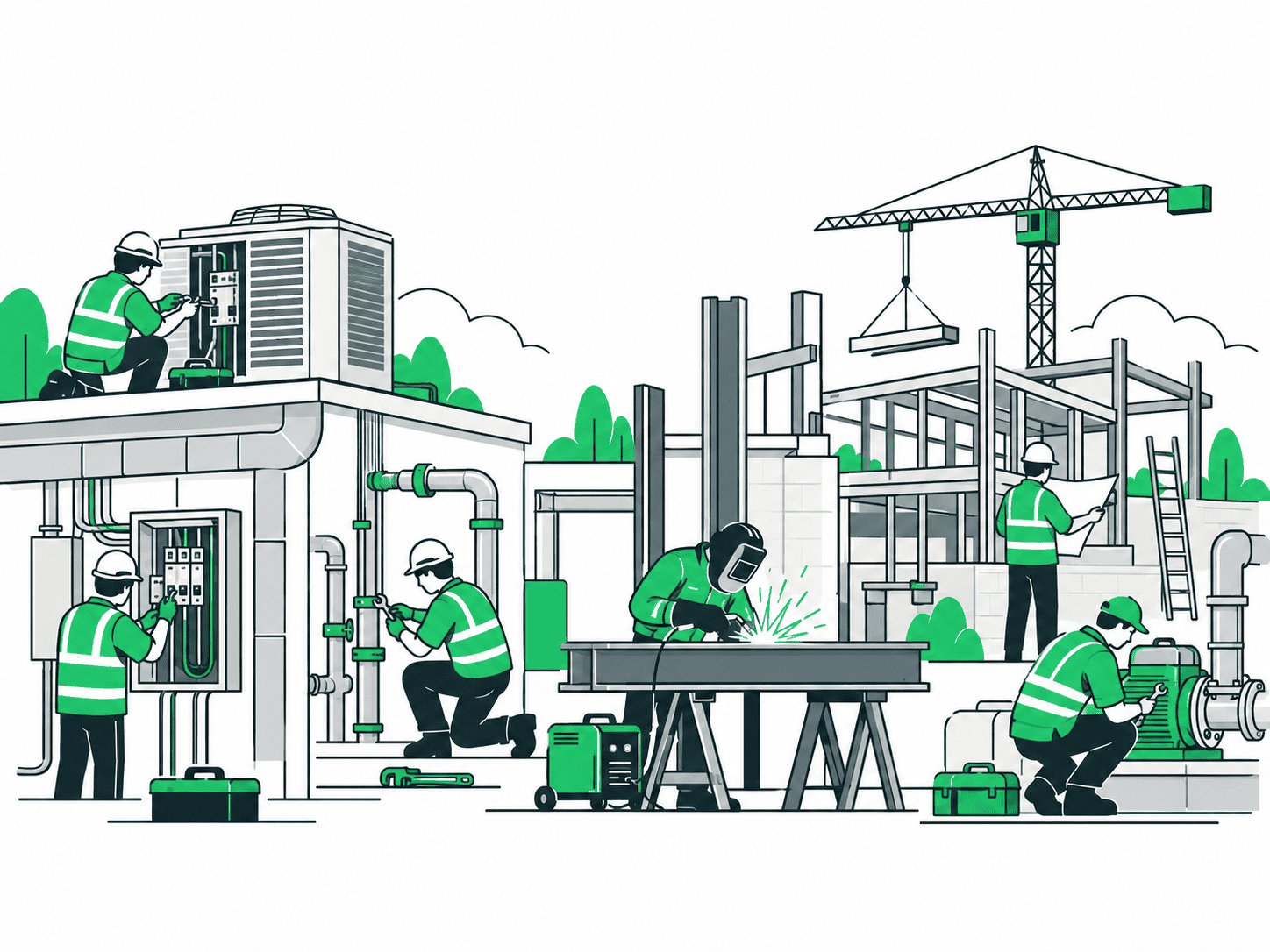
Skilled Trades Certifications help professionals build employer-recognized hands-on skills for careers in electrical work, HVAC/R, plumbing, welding, construction, renewable energy installation, industrial maintenance, mechanical systems, and building services. Whether you are entering the trades, changing careers, or advancing into a more specialized technical role, skilled trades certification programs can strengthen job readiness, support career advancement, and align your qualifications with in-demand trade and infrastructure needs.
Why Skilled Trades Certifications matter to employers
Skilled trades employers often hire for roles where safety, technical accuracy, hands-on troubleshooting, code awareness, equipment knowledge, reliability, and jobsite readiness are critical. Skilled Trades Certifications help validate practical knowledge, demonstrate readiness for real-world work environments, and show that a candidate understands responsibilities tied to tools, systems, safety procedures, maintenance, installation, repair, and quality workmanship.
In competitive hiring markets, these certifications can strengthen credibility for candidates pursuing roles in HVAC/R, electrical work, welding, plumbing, construction, renewable energy, aviation maintenance, industrial maintenance, and related trades. For many employers, certifications signal initiative, technical discipline, and stronger alignment with skilled trades workplace expectations.
Discover certifications that match your career goals and experience.
Not sure this is your fit?
Take our Certification Matcher quiz to get personalized recommendations based on your career goals, experience, and skills.
Get recommendations →What careers can Skilled Trades Certifications support?
Skilled trades certification programs vary by specialization, but many align with career paths connected to HVAC/R, electrical work, plumbing, welding, construction, renewable energy installation, aviation maintenance, industrial maintenance, mechanical systems, facilities support, and field service. The best fit depends on the credential, your background, and the type of skilled trades career you want to pursue.
HVAC/R, electrical, plumbing, and field service technician roles
Construction, building systems, facilities, and maintenance careers
Welding, fabrication, mechanical repair, and industrial trade roles
Solar, energy storage, renewable energy, and power installation careers
Residential services, contractor support, and home systems careers
Aviation maintenance, equipment repair, and technical operations roles
Core skills employers expect in skilled trades careers
Depending on the certification, skilled trades training may emphasize safety procedures, tool use, troubleshooting, installation, maintenance, repair, building codes, electrical systems, refrigeration principles, welding methods, blueprint reading, mechanical systems, inspection practices, jobsite communication, and regulatory compliance. These are the types of skills employers often look for when hiring for hands-on technical, construction, maintenance, and service roles.
As employers continue managing infrastructure needs, building services, residential repair demand, industrial operations, renewable energy projects, and skilled labor shortages, professionals with employer-recognized skilled trades certifications can be better positioned to compete for stable and higher-responsibility trade roles.
Popular skilled trades career interests
Why the field and certifications are attractive
Skilled trades careers support homes, buildings, utilities, construction projects, equipment, infrastructure, and repair needs that employers and communities rely on every day.
Skilled Trades Certifications can help signal readiness for roles where safety, technical skill, troubleshooting, reliability, and hands-on performance matter.
The right credential may support movement into HVAC/R, electrical, welding, plumbing, construction, renewable energy, maintenance, or contractor-focused career paths.
Career demand, occupational outlook, and compensation data can be cross-referenced with resources such as the U.S. Bureau of Labor Statistics and employer job postings.
Compare Skilled Trades Certifications that align with your goals
Whether you are researching HVAC certifications, electrical credentials, welding certifications, plumbing credentials, construction programs, renewable energy installation credentials, maintenance certifications, aviation mechanic credentials, or broader skilled trades certification programs, the right option can help you build employer-trusted skills aligned with real skilled trades career demand. Explore skilled trades certifications to compare programs by specialization, career level, provider, and roles each credential commonly supports.
Explore other leading certifications
Skilled Trades certifications blog
Explore skilled trades certification guides, credential requirements, employer demand, and career paths across hands-on technical and skilled trade roles.
Skilled Trades Jobs Are Here to Stay in the Age of AI
Worried about AI taking jobs? Skilled trades are here to stay. Discover why careers in plumbing, electrical, HVAC, welding, and more remain...
Get updates
New programs, trending credentials, job alerts and hiring demand for the industries you choose.